Beware of scammers on the ghats. Touts and self-styled “guides” or “priests” roam the Ganga ghats and temple lanes, offering VIP darshan, pujas, boat rides or “donations for cremation wood”. Never pay anyone in advance, and never pay for a service before you have actually received it. Book temple services only through the official trust.
Why Kashi matters
Kashi — “the city of light” — is the old name for Varanasi, also called Banaras. Hindu scripture describes it as resting on Shiva’s trident, outside the ordinary cycle of creation and dissolution. The Skanda Purana devotes an entire section, the Kashi Khanda, to its temples and sacred geography.
At its centre stands the temple of Vishwanath (or Vishweshwara), Shiva as the Lord of the Universe. Devotees believe that darshan here, a dip in the Ganga, and — for those who die in Kashi — Shiva’s own whispered mantra at the moment of death bring liberation (moksha).
For pilgrims from Tamil Nadu, Karnataka, Andhra, Maharashtra and Gujarat, the link is ancient: the tradition of “Kashi–Rameswaram” yatra, the Kashi mutts of South Indian lineages, and Rani Ahilyabai Holkar of the Maratha Holkar dynasty, who rebuilt the present temple.
What you will see
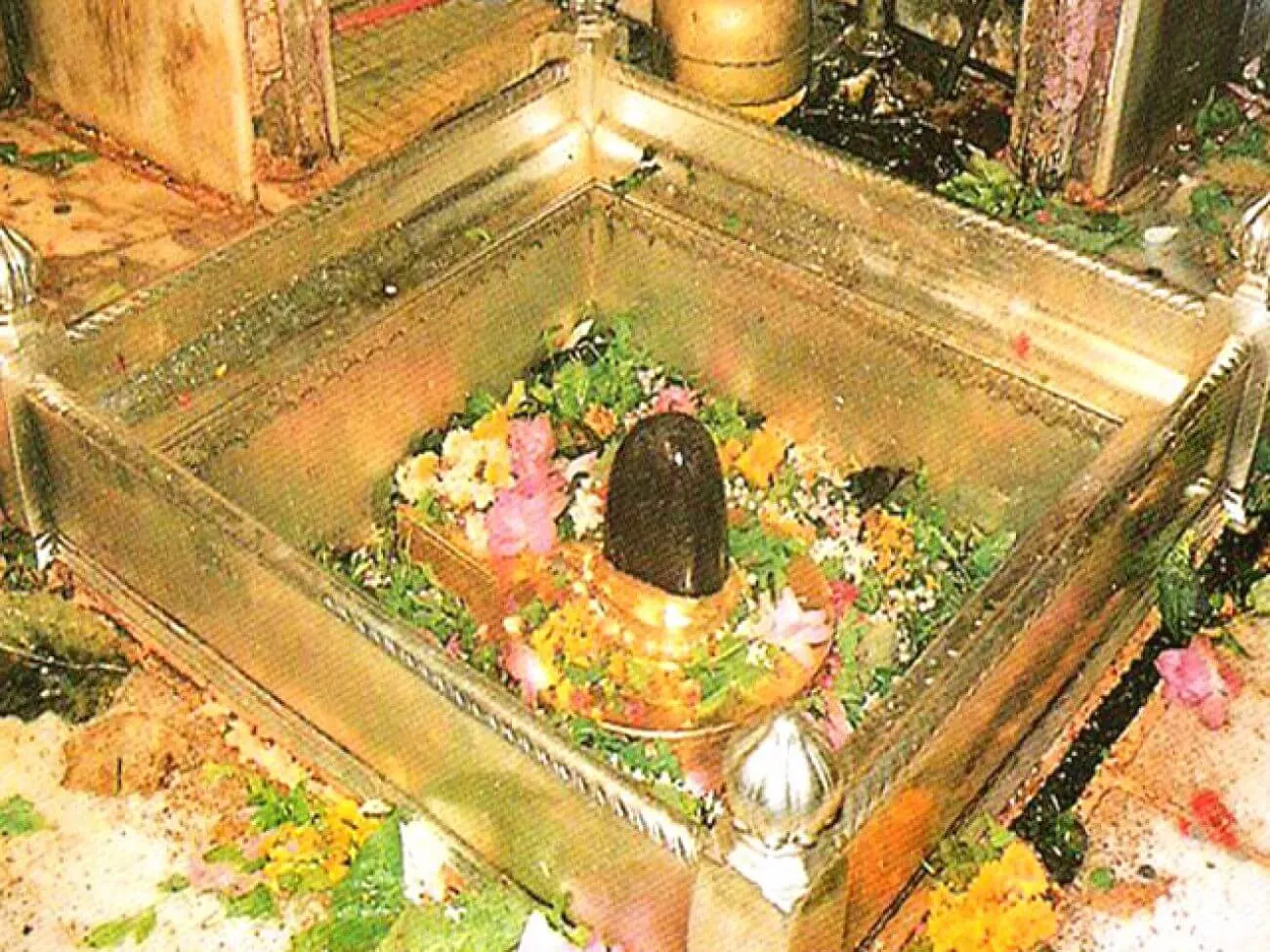
The sanctum
A small silver-framed altar holding the black stone jyotirlinga. The space is intimate — you will be close to the lingam, often only for a few seconds as the line moves.
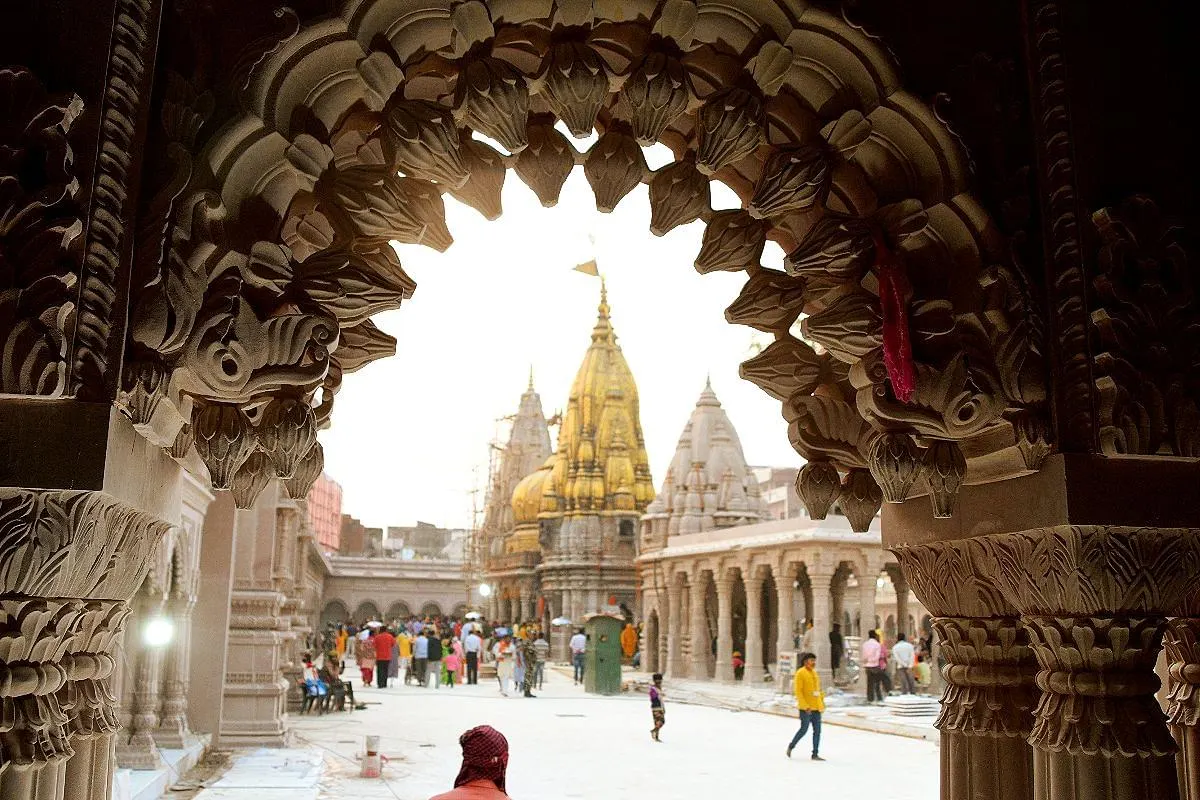
The golden spires
The temple’s shikharas were plated with gold donated by Maharaja Ranjit Singh of Punjab in the 1830s — the reason it is often called the Golden Temple of Varanasi.
The Dham corridor
Since 2021 the temple sits in a wide stone courtyard linked directly to the Ganga ghats, with museums, rest areas and help desks. Read about the corridor.
Smaller shrines
Around the main temple are shrines to Avimukteshwara, Vishnu, Vinayaka, Shani, Virupaksha and others. Many pilgrims also visit Annapurna Devi, just a few steps away.
A typical visit
-
01
Leave valuables behind
Phones, cameras, bags and leather items are not allowed. Use a locker at the gate or leave them at your hotel.
-
02
Buy offerings (optional)
Flowers, bel leaves, milk and Ganga jal are sold in the lanes. You can also go empty-handed — devotion matters, not the offering.
-
03
Security and queue
Pass through the frisking point and join the general or Sugam queue.
-
04
Darshan
Offer your prayer and water/milk as permitted, then move on. Priests may offer to perform a puja for a dakshina; this is optional.
-
05
Explore the Dham
Sit in the courtyard, visit the smaller shrines and walk down to the river through the corridor.
Who can visit
The temple welcomes devotees of all backgrounds, including foreign nationals, who take a separate foreigner ticket with their passport (how it works). Everyone goes through the same security checks. Dress modestly, follow the instructions of the temple staff, and treat it as the active place of worship it is.
Local tip. Before or after Vishwanath, many pilgrims also visit Kaal Bhairav — the “Kotwal” or guardian of Kashi — to complete the yatra.
FAQ